

During winter in New England, salt is a necessary evil. It keeps driveways and sidewalks safe from ice, but what many homeowners don’t realize is that de-icing salt can quietly wreak havoc on their lawn. Once the snow melts, salt doesn’t disappear—it moves. And unfortunately, it often ends up right where your grass is trying to survive.
How Salt Damages Grass and Soil
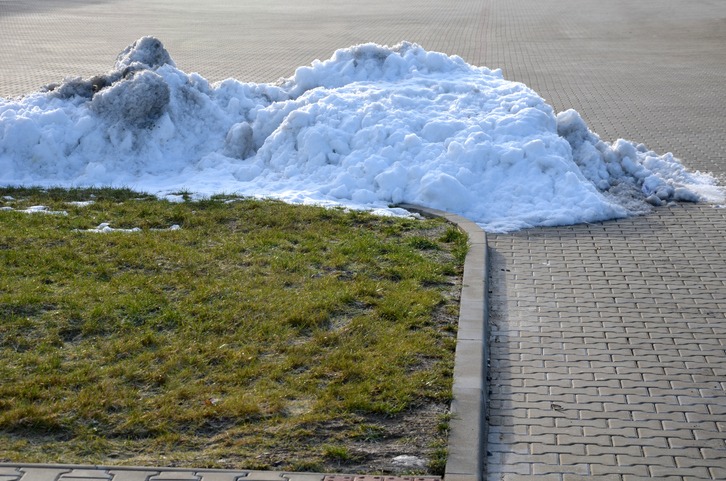
When salt washes off hard surfaces, it seeps into nearby turf and planting beds. Over time, this creates several problems:
- Dehydrates grass plants by pulling moisture out of the roots
- Burns turf blades, causing yellow or brown striping along pavement edges
- Compacts soil, making it harder for grass roots to absorb water and nutrients
- Disrupts nutrient uptake, especially potassium, calcium, and magnesium
- Delays spring green-up, even when the rest of the lawn looks healthy
These issues are most noticeable along driveway edges, sidewalks, and walkways—classic “salt zones” that struggle year after year.
How to Avoid Salt Damage to Your Lawn
You can reduce winter salt injury with a few proactive steps:
- Use calcium magnesium acetate (CMA) or pet- and plant-friendly ice melt products
- Apply salt sparingly—more salt does not mean more effectiveness
- Shovel early and often to minimize ice buildup
- Create a buffer strip with mulch or edging between pavement and turf
- Rinse salt-prone areas with water during winter thaws when temperatures allow
- Avoid piling snow (and salty runoff) onto lawn edges
What If the Damage Is Already Done?

If your lawn shows thinning, discoloration, or dead patches near hardscapes in spring, don’t panic—this is a common and repairable problem.
That’s where Mission Green Services can help.
How Mission Green Services Helps Repair Salt Damage
Mission Green Services takes a science-based approach to lawn recovery, including:
- Soil conditioning treatments to flush excess salts
- Balanced fertilization to restore nutrient availability
- Overseeding with salt-tolerant grass varieties
- Targeted spring and fall recovery programs
- Long-term turf strengthening to prevent repeat damage
Our team understands New England soils, winter conditions, and how to bring stressed lawns back to life—safely and effectively.
Your lawn is our mission—even after winter takes its toll
Salt keeps you safe in winter, but without proper care, it can leave lasting scars on your lawn. A little prevention goes a long way, and when damage does occur, professional repair makes all the difference. With the right strategy and expert support, your lawn can bounce back greener, thicker, and healthier than before.
Give our team a call today at 413-998-7829 to get started on your 2026 lawn care plan. For more lawn care topics, check out our blog!

