

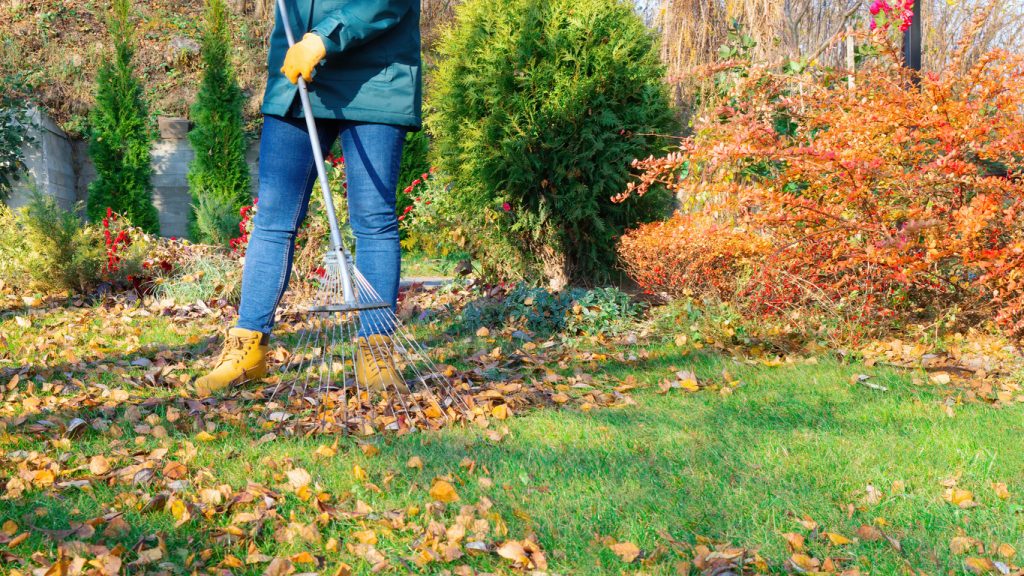
Fall in New England brings beautiful foliage, cooler temperatures, and plenty of leaves covering our lawns. While those colorful leaves are a welcome sign of autumn, homeowners often wonder: Should you rake them up, mulch them, or simply leave them alone?
The answer depends on how many leaves are covering your grass.
Fall leaves can actually benefit your lawn when managed properly. Finely mulched leaves add organic matter to the soil, support beneficial microorganisms, and help improve soil health. However, thick layers of whole leaves can block sunlight, trap moisture, and weaken your grass before winter.
For homeowners throughout Connecticut, Massachusetts, and Rhode Island, proper fall leaf management is an important part of maintaining a healthy lawn.
At MissionGreen Services, we recommend mulching leaves whenever possible and removing excessive buildup before it begins to smother your turf. Understanding when to mulch, rake, or remove leaves can make a noticeable difference in how your lawn looks next spring.
Why Mulching Fall Leaves Is Good for Your Lawn
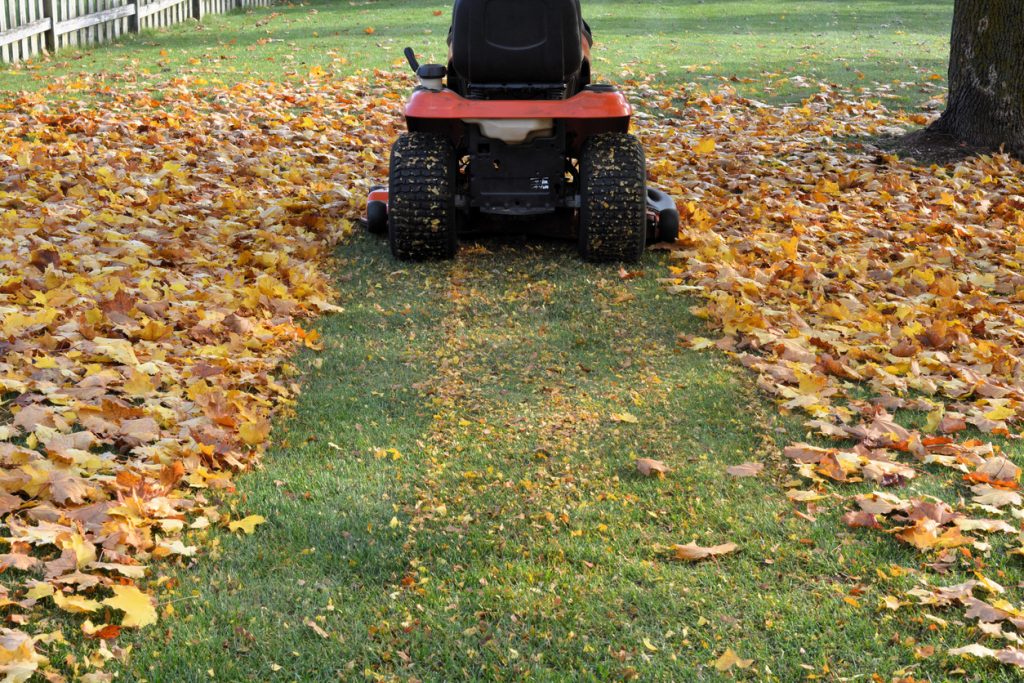
Before spending your entire weekend raking and bagging leaves, consider this: Finely mulched leaves can actually improve your lawn’s overall health!
When you use a mower equipped with mulching blades, fallen leaves break into small pieces that settle between the grass blades. As these pieces decompose, they contribute organic matter and nutrients to the soil.
Here are five benefits of mulching leaves:
- Returns valuable nutrients to the soil. Decomposing leaves release nutrients that contribute to soil fertility and support healthy turf growth.
- Improves soil structure. Organic matter helps improve soil quality, supporting healthier root development and moisture management.
- Supports beneficial microorganisms. Shredded leaves provide organic material for earthworms and soil microorganisms that contribute to a healthy soil ecosystem.
- Reduces yard waste. Mulching eliminates the need to bag and dispose of large quantities of leaves, saving time and reducing waste.
- Provides an environmentally responsible solution. Recycling leaves directly into your lawn makes use of existing natural resources while reducing the need for off- site disposal.
MissionGreen Pro Tip: The key is to mulch leaves finely enough that they settle between the grass blades rather than creating a thick blanket over the turf. If you can still clearly see your grass after mowing, you’re generally on the right track.
When Fall Leaves Become a Problem for Your Lawn
Although mulching offers several benefits, allowing thick layers of whole leaves to accumulate can do more harm than good.
Your grass continues to photosynthesize during the fall, absorbing sunlight and storing energy to help it survive winter. When leaves completely cover the lawn, they prevent sunlight from reaching the grass blades. Over time, this can weaken the turf and reduce its ability to recover in spring.
Heavy leaf coverage can also trap excessive moisture and restrict airflow around the grass.
Wet, matted leaves create conditions that may favor certain turf diseases, particularly when they remain in place for extended periods.
Perhaps most importantly, thick layers of leaves can physically smother your grass. By spring, homeowners may discover thin, weakened, or completely bare patches where leaves accumulated throughout the fall and winter.
The bottom line? A light layer of finely mulched leaves can benefit your lawn, but thick accumulations of whole leaves should be removed or mulched before they cause damage.
Don’t Forget About Ticks! Why Leaf Buildup Can

Increase Tick Habitat One often-overlooked reason for managing fall leaves is their potential to create favorable habitats for ticks.
Ticks are a concern throughout Connecticut, Rhode Island, and Massachusetts because certain species can transmit Lyme disease and other tick-borne illnesses.
Many homeowners assume ticks disappear once summer ends. Unfortunately, that’s not the case.
Blacklegged ticks, commonly called deer ticks, can remain active throughout the fall and even during milder winter days when temperatures rise above freezing.
Ticks prefer environments that provide moisture, shade, and protection from drying out.
Thick accumulations of leaves, especially around wooded borders and areas with dense vegetation, can create these conditions.
Excessive leaf litter can also provide shelter for mice and other small mammals that serve as hosts for ticks.
How Can Fall Leaf Cleanup Help Reduce Tick Habitat?
Proper leaf management is one component of a broader tick prevention strategy.
Homeowners can help reduce favorable tick habitats by:
- Removing excessive leaf litter from frequently used lawn areas, particularly near
patios, walkways, and children’s play spaces.
- Keeping wooded borders and the transition between lawns and natural areas
maintained.
- Clearing brush, tall grass, and accumulated debris that create sheltered
environments.
- Maintaining regularly used outdoor spaces throughout the fall rather than waiting
until spring for a complete cleanup.
Important: Leaf removal alone will not eliminate ticks from your property. However, reducing excessive leaf litter, especially near wooded edges and high-traffic areas, can help make these spaces less favorable for ticks.
And remember, ticks don’t necessarily die when temperatures drop. They can remain sheltered beneath leaf litter and become active again during warmer periods.
Should You Rake, Blow, or Mulch Fall Leaves?
The best approach depends on the amount of leaves covering your lawn and whether your grass remains visible beneath them.
At MissionGreen Services, we recommend the following fall leaf management practices:
Mulch light to moderate leaf coverage. Use a mower equipped with mulching blades to shred leaves into small pieces that settle between the grass blades. This allows them to decompose naturally without creating a heavy layer over your turf.
Rake or blow heavy leaf accumulations. If leaves are piling up faster than your mower can effectively mulch them, remove the excess to prevent matting and turf damage.
Pay attention to wooded borders. Clear excessive leaf litter from frequently used lawn areas and along wooded edges where ticks may find favorable habitat.
Continue mowing throughout the fall. As long as your grass is actively growing, regular mowing helps manage leaves while supporting healthy turf heading into winter.
MissionGreen’s recommendation: You don’t need to remove every leaf from your lawn.
The goal is to keep grass visible and prevent thick, wet layers from accumulating.
Can MissionGreen Fertilize My Lawn If There Are
Leaves on It?
This is a common question we receive from homeowners during the fall lawn care season.
Yes! In most cases, a light scattering of leaves will not prevent MissionGreen from treating your lawn. When grass remains visible and leaves aren’t heavily matted, professional fertilizer applications can generally proceed as scheduled.
However, heavy leaf coverage can interfere with how evenly fertilizer reaches the turf and soil. If your lawn has thick accumulations of leaves, we recommend removing or mulching the excess before your scheduled treatment.
This is one reason we encourage homeowners to maintain their lawns throughout the fall rather than waiting until every leaf has dropped before beginning cleanup.
Fall fertilization is especially important for the cool-season grasses commonly found throughout New England. As temperatures cool, these grasses can continue developing their root systems and storing nutrients that support winter survival and spring green-up.
A professionally designed fall fertilization program helps replenish nutrients, support recovery from summer stress, and prepare your lawn for the colder months ahead.
Combining proper leaf management with professional fall fertilization gives your lawn a stronger foundation heading into winter.
Frequently Asked Questions About Fall Leaves and
Lawn Care Is it better to mulch leaves or rake them?
Mulching is generally the better option when leaf coverage is manageable. Finely shredded leaves contribute organic matter to the soil and reduce yard waste. Raking or removing
leaves becomes necessary when heavy accumulations prevent sunlight from reaching the grass.
Will leaves left on my lawn kill the grass?
Yes, thick layers of leaves can weaken or kill grass when left in place for extended periods.
Matted leaves block sunlight and trap moisture, potentially causing thinning and bare patches by spring.
Does removing leaves help reduce ticks?
Removing excessive leaf litter, especially around wooded borders and frequently used outdoor spaces, can reduce favorable tick habitat. However, leaf cleanup alone will not eliminate ticks from your property.
When should I stop mulching leaves in the fall?
You can continue mulching as long as leaves can be shredded finely enough to settle between the grass blades without creating a thick layer. If leaf volume becomes excessive, remove some before continuing.
Can I leave mulched leaves on my lawn all winter?
Yes, provided the leaves have been finely shredded and aren’t forming a thick, matted layer. Small pieces can gradually decompose and contribute organic matter to the soil without significantly interfering with turf health.
The MissionGreen Approach: Healthy Lawns and
Responsible Lawn Care At MissionGreen Services, we believe a beautiful lawn is about more than appearance. It’s about building healthier turf, improving soil conditions, and making environmentally responsible decisions throughout the year.
With more than three decades of green industry experience, our team understands the unique challenges homeowners face across Connecticut, Massachusetts, and Rhode Island.
Our approach to fall leaf management is simple: Mulch when you can, remove excess leaves when necessary, and never allow thick layers of debris to smother your lawn.
And when it comes to ticks, remember that maintaining your landscape and reducing favorable habitats are important parts of protecting your outdoor living spaces.
Healthy Fall Lawn Care Starts with Smart Leaf
Management Fall leaves don’t have to be a problem for your lawn. With proper mulching, timely cleanup, and continued lawn maintenance, you can protect your turf while taking advantage of the natural benefits leaves provide.
At MissionGreen Services, we help homeowners throughout Connecticut, Massachusetts, and Rhode Island build healthier, stronger lawns with professional fertilization, weed control, and seasonal lawn care programs.
Give your lawn a strong finish to the growing season and a head start on spring!
Contact MissionGreen Services at 413-998-7829 to learn more about our lawn care programs.

