

If you’ve spent any time outdoors lately, you may have noticed an unwanted visitor showing up in increasing numbers: the spotted lanternfly.
From Connecticut to Massachusetts and Rhode Island, homeowners are reporting spotted lanternflies on trees, decks, patios, vehicles, and around their landscapes. Unfortunately, this invasive insect is no longer something we’re only hearing about from neighboring states—it has become established throughout parts of New England.
At MissionGreen Services, we’ve been receiving questions from customers about what these insects are and what they can do about them. MissionGreen does not currently offer spotted lanternfly control as a service. However, we believe education is an important part of helping our customers care for their properties, so we wanted to provide some practical information.
What Is the Spotted Lanternfly?
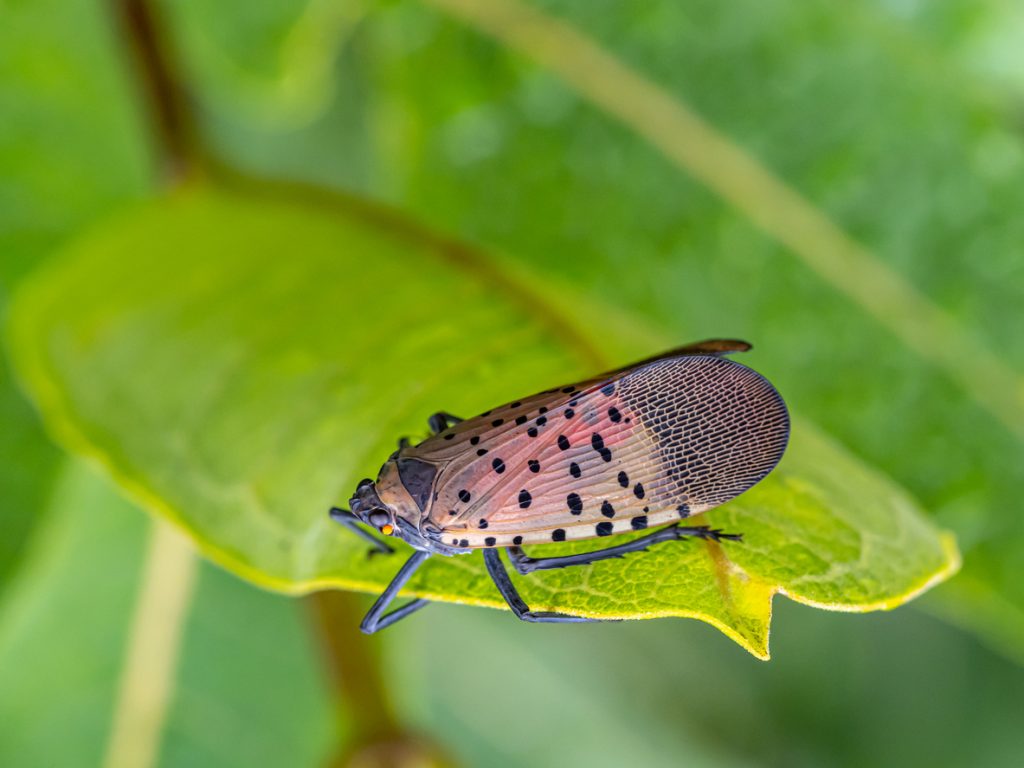
The spotted lanternfly (Lycorma delicatula) is an invasive insect native to Asia. It was first detected in the United States in Pennsylvania in 2014 and has steadily expanded into other states.
Today, USDA reports established spotted lanternfly populations in numerous states, including Connecticut, Massachusetts and Rhode Island.
Connecticut first detected spotted lanternfly populations in Fairfield County in 2020, and the insect has since spread extensively across the state. (CT.gov) Massachusetts has also experienced significant expansion, with state officials reporting confirmed detections in more than 50 communities across nine counties by August 2025. Rhode Island reports that spotted lanternfly is now established in all of its counties.
So why is it spreading so quickly?
They’re Excellent Hitchhikers
One of the biggest reasons spotted lanternfly has moved so successfully is that we humans unknowingly help transport it.
Adults, nymphs and especially egg masses can hitch rides on vehicles, trailers, campers, outdoor furniture, landscaping materials, firewood and equipment. Egg masses can be particularly difficult to notice because they often resemble a smear of dried mud.
This allows the insect to travel much farther and faster than it could simply by flying.
Tree-of-Heaven Helps Them Thrive
Another major factor is the presence of tree-of-heaven (Ailanthus altissima), another invasive species that is common along roadsides, vacant lots, disturbed areas and property edges.
Tree-of-heaven is the preferred host of spotted lanternfly. When you combine an abundant preferred host with an insect capable of hitchhiking from one community to another, you have a recipe for rapid expansion. (CT.gov) Spotted lanternflies aren’t limited to tree-of-heaven, however. They can feed on many different plants, including grapes, hops, black walnut and numerous ornamental and landscape plants.
Are Spotted Lanternflies Dangerous?
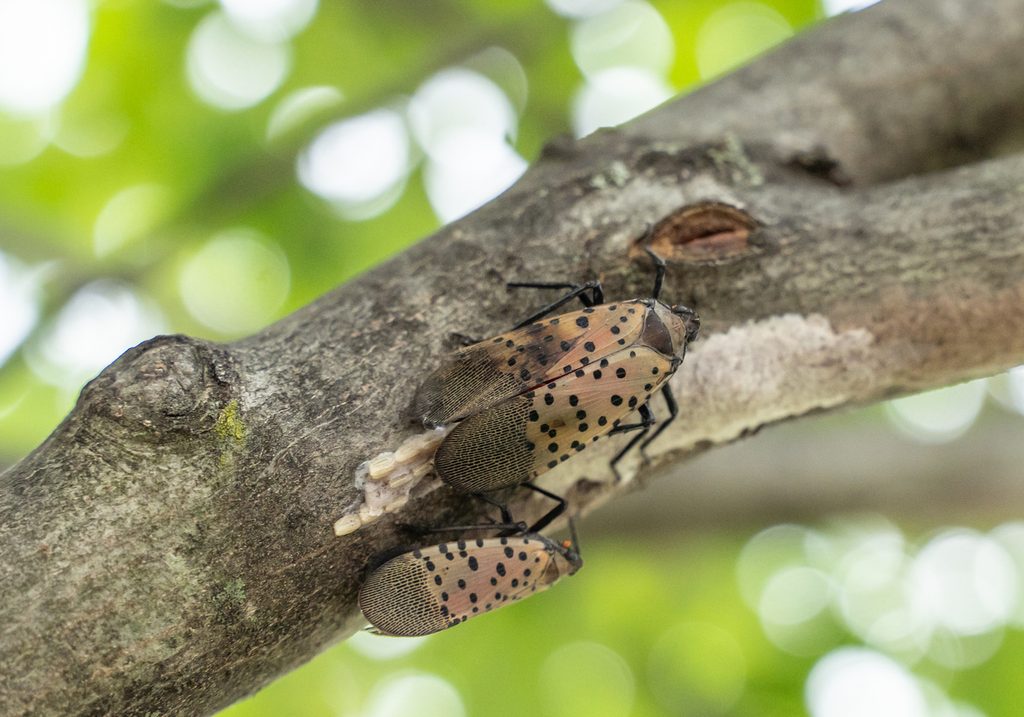
For homeowners, the good news is that spotted lanternflies do not bite or sting people or pets, nor do they infest homes. For most residential properties, they’re primarily a significant nuisance rather than something that will suddenly kill every mature tree in the landscape. (RIDEM) The bigger concern is their numbers and feeding activity.
Spotted lanternflies feed by piercing plants and consuming sap. As they feed, they produce a sugary waste material called honeydew. Heavy accumulations can make surfaces underneath infested trees sticky and encourage the development of black sooty mold.
Honeydew can cover leaves, patios, decks, vehicles and outdoor furniture while also attracting wasps, ants and other insects.
What Can Homeowners Do Without Pesticides?
The important thing to understand is that homeowners do have options that don’t involve pesticide applications.
Here are several steps worth taking:
Destroy the insects when you see them. It may sound overly simple, but physically killing adults and nymphs helps reduce the number of insects capable of reproducing.
Search for and destroy egg masses. From fall through spring, inspect tree trunks, rocks, fences, outdoor furniture, trailers, grills and other hard surfaces. Egg masses typically appear grayish-brown and can resemble dried mud. Scrape the entire mass off and crush it or place it into rubbing alcohol or hand sanitizer. (RIDEM)
Use circle traps. Circle-style traps installed around infested trees can capture spotted lanternfly nymphs and adults as they naturally climb upward on the trunk. These can be an effective pesticide-free option. Avoid improperly installed sticky bands, which can accidentally capture birds and other wildlife.
Vacuum large clusters. A shop vacuum or similar vacuum can physically remove clusters from accessible trees, structures and outdoor surfaces. Rhode Island DEM specifically lists vacuuming as one homeowner control option. (RIDEM)
Inspect your vehicles and outdoor equipment. Before traveling, look over vehicles, trailers, campers, lawn equipment, outdoor furniture and other objects that have been sitting near an infestation. Preventing spotted lanternflies from hitching a ride is one of the simplest things homeowners can do to slow their spread. (CT.gov)
Learn to identify tree-of-heaven. If tree-of-heaven is growing on your property, consider speaking with a qualified professional about proper management. Simply cutting mature tree-of-heaven isn’t always the best solution because the tree can aggressively produce new shoots from its root system.
Don’t Panic—But Don’t Ignore Them Either
Seeing hundreds of spotted lanternflies covering a tree can certainly be alarming. But homeowners should keep the problem in perspective.
For most residential landscapes, spotted lanternfly is currently considered primarily a nuisance pest, while the greater economic concern involves vineyards, orchards, nurseries and certain agricultural crops. (RIDEM) At the same time, homeowners can play an important role in slowing its movement.
Learn what spotted lanternfly looks like. Check your property. Destroy egg masses. Kill insects when practical. Inspect vehicles and outdoor equipment before traveling. And follow your state’s recommendations regarding reporting new or unusual infestations.
An Important Note From MissionGreen Services
We want to be clear that MissionGreen Services does not currently provide a spotted lanternfly treatment or control service.
We’re sharing this information because we’re seeing more homeowners and customers dealing with this invasive pest and asking what they can do.
Sometimes the best service we can provide is simply good information.
The spotted lanternfly is likely going to remain part of the New England landscape for the foreseeable future. While homeowners may not be able to eliminate it completely, understanding its life cycle and taking a few simple, pesticide-free steps can help reduce populations around the property and—just as importantly—help slow its continued spread.
See them. Identify them. Remove them. And don’t give them a free ride to their next destination.

