

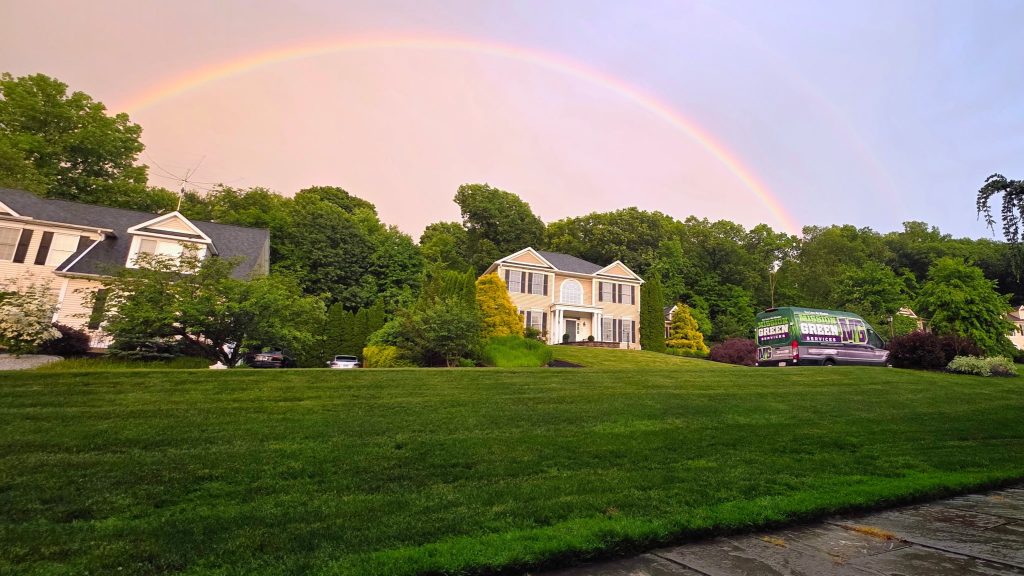
A beautiful green lawn shouldn’t come at the expense of the environment. When homeowners think about lawn care, they often picture a thick, green, weed-free lawn. But achieving a beautiful lawn involves much more than simply applying fertilizer and spraying weeds.
At MissionGreen Services, we believe the best lawn care program is one that works with nature, not against it. Our philosophy is simple: Maximize healthy turf growth and root development while minimizing the need for control products.
For us, environmentally sustainable lawn care isn’t about eliminating every product or treatment. It’s about making responsible, science-based decisions that promote long-term turf health while reducing unnecessary applications.
And here’s something many homeowners don’t realize: A healthier lawn naturally requires fewer corrective treatments.
What Is Environmentally Sustainable Lawn Care?
Environmentally sustainable lawn care focuses on maintaining healthy grass, improving soil conditions, conserving resources, and using pest control products only when justified.
Rather than relying exclusively on products to correct problems, sustainable lawn care addresses the underlying conditions that allow weeds, insects, and diseases to develop.
Think of your lawn like your own health. Proper nutrition, preventive care, and a healthy lifestyle can reduce the likelihood of future problems. Your lawn works much the same way.
When grass receives the proper nutrients, develops deep roots, and grows in healthy soil, it becomes better equipped to tolerate environmental stress.
Five Ways MissionGreen Promotes Environmentally Responsible Lawn Care

1. Building Stronger Roots Instead of Simply Greener Grass One of our primary goals at MissionGreen Services is developing a strong, healthy root system.
While homeowners see the grass above ground, much of what determines a lawn’s long-term health happens beneath the surface.
A well-developed root system can:
- Improve the lawn’s ability to absorb water and nutrients.
- Increase tolerance to heat and drought stress.
- Help grass recover from everyday wear and environmental challenges.
- Improve turf density, making it more difficult for weeds to establish.
- Reduce the need for certain corrective treatments over time.
Our philosophy: Don’t just grow greener grass. Grow healthier grass from the roots up.
2. Minimizing Unnecessary Weed and Insect Control Products Not every weed, insect, or lawn imperfection requires an immediate pesticide application.
At MissionGreen, we believe in using control products responsibly and only when there is a legitimate agronomic reason to do so.
Our approach incorporates principles of Integrated Pest Management (IPM), a science-based strategy that emphasizes prevention, monitoring, proper identification, and targeted treatment.
This includes:
- Identifying the actual problem before recommending treatment.
- Evaluating whether pest populations justify an application.
- Using properly timed treatments to improve effectiveness.
- Avoiding unnecessary applications when natural seasonal changes will resolve certain problems.
- Encouraging healthier, denser turf to reduce opportunities for weeds to establish.
- Selecting appropriate products and following all label requirements.
For example, crabgrass is a summer annual that naturally dies following a hard frost. As temperatures cool in the fall, treating mature crabgrass may provide little practical benefit when the plant is already approaching the end of its life cycle.
Sometimes the most environmentally responsible application is the one we choose not to make.
3. Proper Fertilization: Giving Your Lawn What It Needs, Not More Than It Needs Fertilizer plays an important role in maintaining healthy turf. However, applying more fertilizer doesn’t necessarily mean better results.
Excessive or poorly timed fertilization can contribute to nutrient runoff, unnecessary growth, and environmental concerns.
MissionGreen focuses on providing balanced nutrition based on seasonal turfgrass needs and soil conditions.
Our approach emphasizes:
- Applying nutrients at appropriate times during the growing season.
- Supporting root development and turf recovery.
- Encouraging consistent growth rather than excessive top growth.
- Recommending soil testing when appropriate to better understand nutrient requirements.
- Using sound agronomic practices to minimize nutrient losses.
Proper nutrition helps produce a denser, more resilient lawn that can better compete with undesirable weeds.
4. Improving Soil Health Through Core Aeration and Overseeding Healthy grass starts with healthy soil.
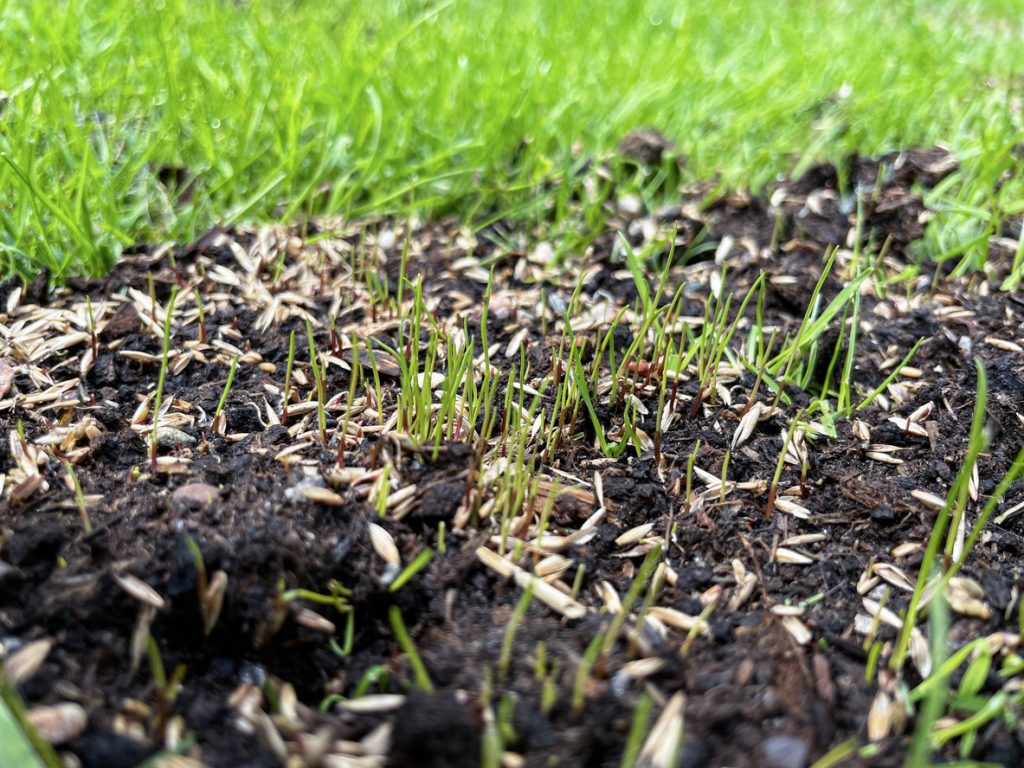
Over time, soil can become compacted, limiting the movement of air and water into the root zone. Core aeration helps relieve compaction and creates conditions that encourage healthier root growth. When combined with overseeding, this process can help improve turf density and introduce desirable grass varieties.
A thicker lawn offers several environmental advantages:
- More complete ground coverage can help reduce soil erosion.
- Healthy roots improve soil structure.
- Dense turf helps limit opportunities for weed establishment.
- Improved soil conditions can support more efficient water infiltration.
- Selecting suitable grass varieties can improve resilience against environmental stress.
At MissionGreen, we believe one of the best forms of natural weed suppression is a thick, healthy lawn.
5. Making Responsible Decisions for Our Customers and Communities Environmental responsibility also means understanding that every lawn is different.
A heavily shaded lawn has different requirements than one exposed to full sunlight. Sandy soil behaves differently than compacted clay soil. And a lawn experiencing drought stress should not automatically receive the same recommendations as one growing vigorously.
Our goal is to make recommendations based on the actual needs of the property, rather than assuming every lawn requires the same treatments.
That means considering weather conditions, soil health, grass varieties, seasonal timing, and pest activity before recommending services.
Why Sustainable Lawn Care Benefits You, the
Homeowner Environmentally responsible lawn care isn’t just good for the environment. It can also provide meaningful benefits to your property and your wallet.
1. Better Long-Term Results: A lawn built on healthy soil, proper nutrition, and strong roots is better positioned to remain attractive and resilient.
2. Fewer Unnecessary Treatments: By focusing on prevention and turf health, we aim to reduce the need for avoidable pesticide applications.
3. Improved Water Efficiency: Deep, healthy root systems can help turf access moisture more effectively, potentially reducing supplemental watering needs.
4. Greater Resistance to Stress: Healthy grass can better withstand certain environmental challenges, including heat, drought, and everyday traffic.
5. A More Responsible Investment: Preventing problems through proper maintenance can reduce the need for expensive corrective services and major lawn renovations.
The Environmental Benefits of Healthy Natural Turf
A properly maintained natural lawn provides more than curb appeal. Healthy turfgrass can help stabilize soil, reduce erosion, capture airborne particles, moderate surface temperatures, and absorb rainfall.
Like other plants, turfgrass also captures carbon dioxide through photosynthesis and stores some carbon in plant tissue and soil.
However, the overall environmental benefits depend on how the lawn is managed, including fertilizer use, irrigation, mowing practices, and other maintenance inputs.
That’s why responsible management is so important.
The goal isn’t simply to have a green lawn. It’s to maintain a healthy lawn while being thoughtful about the resources and products used to achieve it.
The MissionGreen Difference: Science, Experience, and

Environmental Responsibility At MissionGreen Services, we believe professional lawn care should be about more than applying products. It’s about understanding turfgrass, recognizing problems before they become severe, and developing a long-term plan for a healthier lawn.
Our approach is built around three important principles:
Healthy Soil + Strong Root Development + Responsible Product Use = Better Long-Term Lawn Health
We recognize that pesticides and other control products can play an important role in professional lawn care. When needed, they should be selected carefully, applied by trained professionals, and used according to their labels. But our first priority is always to create the healthiest growing environment possible. Because when you focus on developing strong roots and thick, vigorous turf, you are addressing many lawn problems before they ever begin.
A Greener Future Starts Beneath Your Feet
For homeowners throughout Connecticut, Massachusetts, and Rhode Island, MissionGreen Services is committed to providing professional lawn care rooted in sound agronomic practices and environmental responsibility.
We don’t believe that more products automatically mean better lawn care. We believe better decisions, healthier soil, stronger roots, and responsible treatments lead to better lawns.
And that’s a philosophy that benefits our customers, our communities, and the environment. MissionGreen Services — Growing healthier lawns through smarter, more responsible lawn care.
Contact MissionGreen Services today at 413-998-7829 to learn how our professional lawn care programs can help create a thicker, healthier, more resilient lawn.

